The cheapest-looking injection molding quote is not always the lowest-cost route. Different suppliers may be quoting different cavity counts, steel assumptions, annual volumes, sample rounds, inspection requirements or packaging scopes. Before you compare the numbers, make the scope comparable.
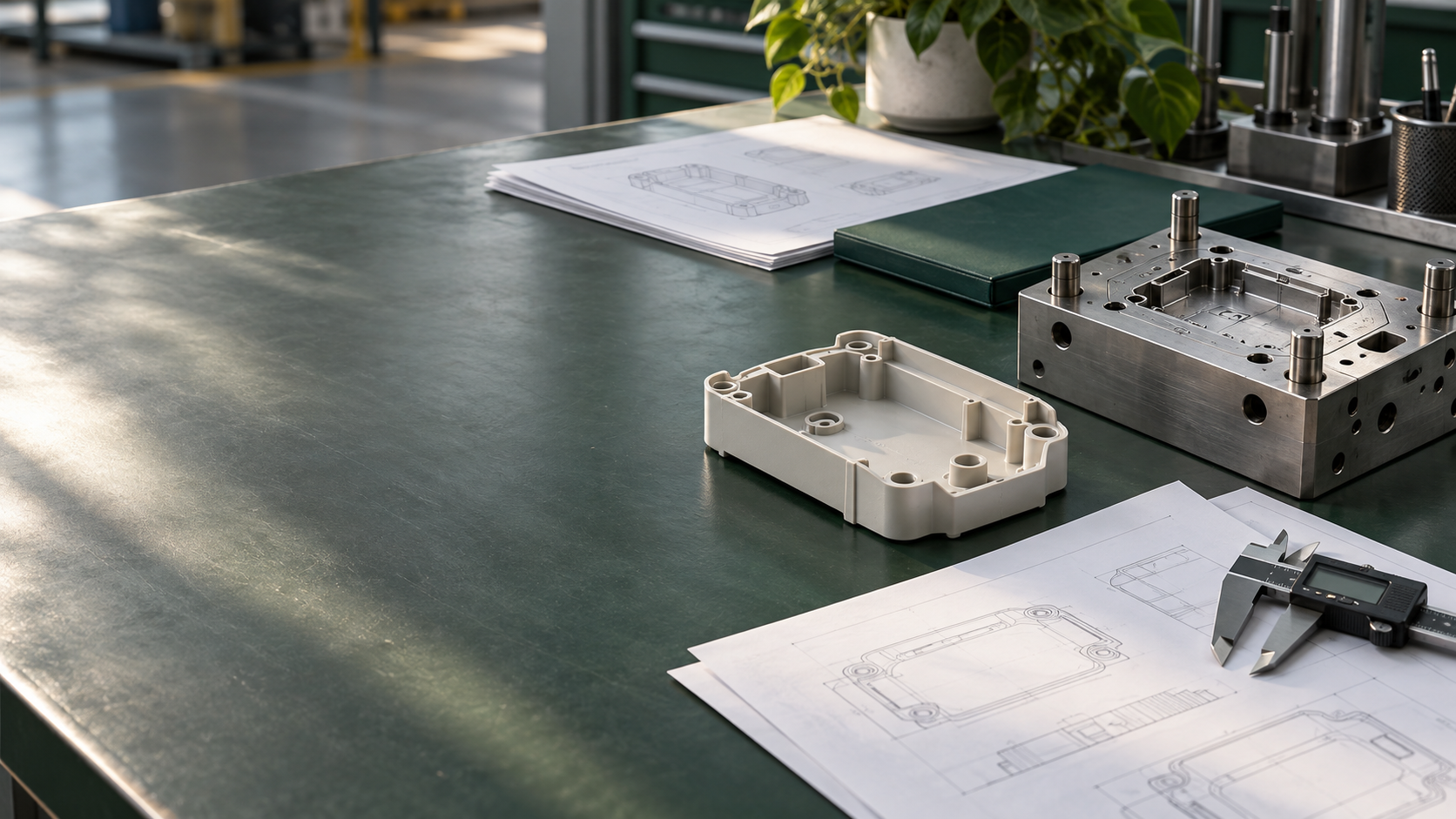
1. Normalize the Scope Before Comparing Price
Start with one controlled brief for every supplier. It should identify the same part revision, material or performance target, first-order quantity, repeat-volume assumption, appearance requirements and destination market. If one supplier is quoting a stock product and another is quoting a new custom tool, the numbers are not comparable yet.
Also write down what is deliberately outside the first quote. For example: assembly, printing, special testing, export packing, freight, duties or certification. A transparent exclusion is easier to evaluate than a low number whose boundaries are unclear.
For a custom part, send the strongest evidence you have—STEP or other 3D CAD, a dimensioned drawing, prototype, physical sample or clear photographs. A complete package helps, but an early custom injection molding review can begin with a clear explanation of what the part must do and what is still undecided.
2. Ask What the Quote Actually Includes
A useful quotation separates one-time tooling from recurring part cost and states its assumptions. Look for these lines or ask the supplier to confirm them:
- Part basis: drawing or CAD revision, part weight if known, resin grade, color and cosmetic requirements
- Volume basis: first order, annual demand, cavity count, production quantity and any minimums
- Tooling: mold construction, steel or material basis, cavities, hot or cold runner assumptions, expected maintenance and ownership
- Sampling: T1 timing, sample quantity, inspection report, correction rounds and who pays for later revisions
- Operations: trimming, printing, inserts, assembly, inspection, labeling and packaging
- Commercial terms: lead time, payment milestones, quote validity, freight basis and clearly stated exclusions
When a line is missing, treat it as an open question rather than assuming it is included. That single habit prevents many “surprise” costs after a project has already started.
3. Compare Tooling as Its Own Decision
Tooling is a one-time project decision that affects part price, capacity, sampling and future flexibility. Two molds that produce a similar first sample may still differ in cavity count, steel, cooling, maintenance access, expected life, replacement strategy or ease of transfer.
Ask how the quoted mold matches the demand you actually expect. A lower initial tooling price may be reasonable for a pilot, while a higher-cavity strategy may make sense for a steady program. Neither is universally correct; the quote should explain the intended production logic.
Ownership also needs to be explicit. Confirm who owns the tool after payment, where it is stored, who maintains it, how access or release works and what happens if production moves. Do not rely on a verbal understanding that is absent from the commercial record.
4. Read the DFM and Revision Assumptions
A quote is not a substitute for a design-for-manufacturing review. Ask whether the quoted price assumes the current geometry is ready to mold or whether the supplier expects changes to draft, wall transitions, ribs, bosses, parting line, gate location, ejection or tolerances.
Separate three types of change: a design change requested by the buyer, a tooling correction needed to meet the approved design, and a process adjustment made during sampling. They may have different cost and timing implications. The quote or project plan should make that distinction visible.
For a practical overview of the transition from a working prototype to tooling and T1 approval, see the CHILLIX guide on what hardware teams should prepare before injection molding.
5. Define the T1 Sample and Approval Gate
A T1 sample is an early part produced from newly completed tooling. It is a checkpoint, not automatically a production release. Before the tool is cut, agree on what the sample will prove: dimensions, fit, function, appearance, material, color, assembly interfaces and any specific inspection documents.
Ask how many samples are included, when they will be available, how feedback will be recorded and what happens after a failed or incomplete trial. A clean approval process protects both sides: the buyer knows what can be accepted, and the factory knows which observations require action.
- 01Normalize inputs
- 02Separate tooling
- 03Review DFM
- 04Define T1
- 05Confirm quality
- 06Agree delivery
6. Check Quality and Documentation Before You Need It
Quality should be connected to the part's function and the buyer's approval method. Identify critical dimensions, mating features, cosmetic areas, material evidence, color standard, inspection frequency and the records needed for release.
Do not assume that a generic factory certificate answers a project-specific requirement. If testing, traceability, labeling or a customer standard matters, name it in the brief and confirm which site, material, process or product it applies to.
For replacement or equipment components, add the failure consequence and any service-life, temperature, chemical or load requirements. For consumer products, add intended use, packaging and destination-market considerations early. Clear requirements make the quote more comparable and the sample review more useful.
7. Compare the Landed Route, Not Only the Unit Price
Piece price is only one part of the commercial picture. Add the items needed to get an approved product to its destination: tooling, sampling, inspection, assembly, packaging, export packing, freight, duties or other buyer-side costs that are relevant to the route.
Packaging can change both protection and freight economics. A quote that includes a bulk carton is not directly comparable to one that includes retail-ready packaging. Likewise, a quote based on a larger production run may show a lower part price while requiring more inventory than the first program can support.
CHILLIX can help coordinate injection molding, assembly and packaging when those activities are part of the agreed project scope. The practical route is confirmed per product, factory and destination.
8. Illustrative Quote-Comparison Example
Illustrative only: This table is a simulated example created to show the comparison method. It is not a CHILLIX quotation, price promise or customer result.
| Line item | Quote A | Quote B | Question to resolve |
|---|---|---|---|
| Tooling basis | Single cavity; steel not stated | Two cavities; steel and service assumptions stated | Is the capacity appropriate for the expected volume? |
| Part price basis | Quoted at a small first order | Quoted at a larger production run | Are both prices based on the same quantity? |
| T1 sampling | Samples listed; correction terms unclear | T1 plus inspection report and one correction round listed | What exactly is included before approval? |
| Packaging | Excluded | Bulk carton included | Are pack-out and freight assumptions comparable? |
| Mold ownership | Not stated | Buyer ownership and release terms stated | Who owns, stores and can move the tool? |
| Lead time | Tooling and production shown as one number | Tooling, T1, approval and production separated | Which milestone controls the launch plan? |
The better quote is the one that lets the buyer make an informed decision—not automatically the one with the lower headline number. If the assumptions cannot be made comparable, the next step is clarification, not a rushed award.
A Quote-Ready Checklist
- Part evidence: CAD/STEP file, drawing, prototype, physical sample or reference photos
- Function: what the part must do, mate with or withstand
- Critical features: dimensions, tolerances, interfaces and cosmetic areas
- Material: resin preference or required performance characteristics
- Volume: first order, expected repeat demand and launch timing
- Tooling: cavity strategy, steel or life preference, ownership and maintenance questions
- Sampling: T1 quantity, inspection points, approval method and revision assumptions
- Operations: inserts, secondary processing, assembly and inspection
- Packaging: unit pack, labels, inserts, cartons and destination requirements
- Commercial route: destination, freight basis, lead time and known documentation needs
Frequently Asked Questions
Why can two injection molding quotes look so different?
The quotes may use different assumptions about part volume, cavity count, steel or mold life, material grade, secondary operations, samples, inspection, packaging, freight or revision scope. Normalize those inputs before comparing the headline price.
Should tooling and piece price be compared separately?
Usually, yes. Tooling is a one-time project cost, while piece price depends on volume, material, cycle time, cavity strategy and included operations. Keeping them separate makes the commercial assumptions easier to review.
What should a T1 sample approval include?
Agree what will be checked: dimensions, fit, function, appearance, material, color, assembly interfaces and any documentation or inspection report. A T1 sample is an early trial, not automatically a production approval.
Who owns the injection mold?
Ownership should be stated in the commercial agreement, together with payment status, storage, maintenance, access and any conditions for moving the mold. Do not assume ownership terms from a unit-price quote alone.
Can CHILLIX review a quote if I only have a prototype?
Yes. A prototype, sample, photos or a functional description can support an initial review. CAD, drawings, expected quantity, material or performance requirements and destination market information will make the comparison more precise.
What should I send when asking for a quote comparison?
Send the part file or sample, drawing and critical dimensions, intended function, material preference or performance needs, first and repeat quantities, appearance requirements, assembly and packaging scope, destination and timing.
A practical next step
Have two quotes—or a part that needs one?
Send the CAD file, drawing, prototype or reference you already have, plus the expected quantity and destination. CHILLIX can help organize the questions that need answers before tooling or production is approved.
Start a project inquiry